Websites Without Admin Panels — AI Bot Replaces the CMS
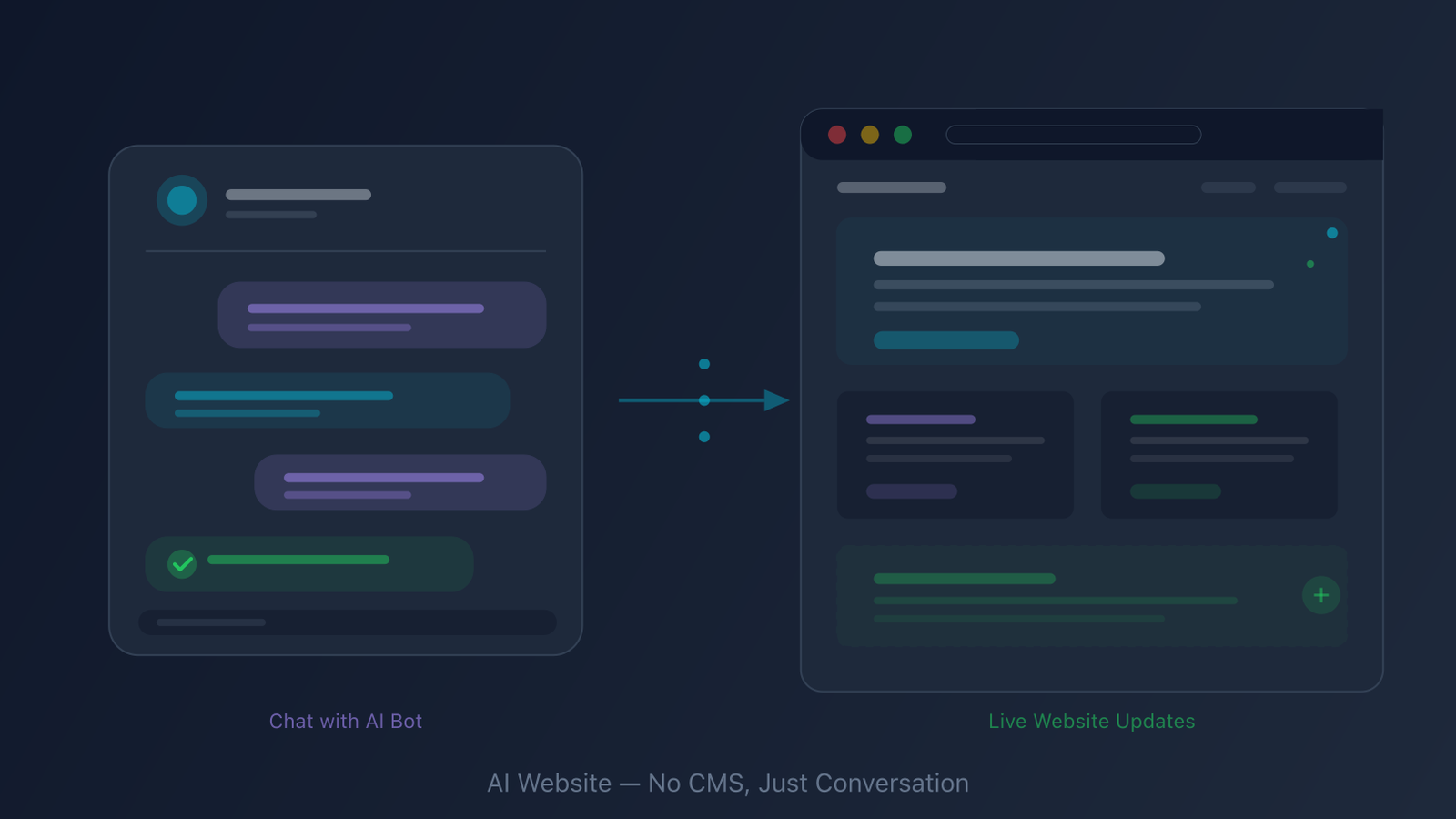
A new standard in web development: websites where content changes are handled by a built-in AI bot, not a CMS. Just tell the bot what to change — and it happens in minutes. Content, visuals, structure, and even systemic upgrades.
The Challenge
Traditional web development has followed the same script for twenty years. Developers build the site, attach a content management system (CMS) — WordPress, Strapi, or another — and hand it over to the client. From that point on, the client manages content through an admin panel: adding text, swapping images, publishing updates.
The problem? Admin panels require training. Clients constantly hit limitations — they can’t change the layout, can’t add a new section, can’t refresh the design without calling the developer. The website is essentially frozen in the state it was delivered. Over time the site ages, the CMS needs security patches and updates, and every next step means going back to the developer with a new budget.
The Solution
There is now an alternative: a website with a built-in AI bot that fully replaces the traditional CMS.
The bot is built during development. It’s not a separate product bolted on afterward — the bot is an integral part of the site. When the project is delivered, the bot is already ready to work.
Content changes through conversation. The client simply messages the bot (or uses voice): “Change the headline to…”, “Add a new section with our latest services”, “Remove the old banner”. The bot understands the instruction, makes the changes, and publishes them — all within minutes.
Not just text. The bot can also modify visual elements and page structure. A new section, a changed layout, an added form or gallery — all within the bot’s capabilities, without writing any code.
Systemic changes. The most fascinating part is that the bot can also make deeper modifications — adding new features, integrating technology capabilities, expanding what the site can do. The website is no longer a static product that ages over time. It evolves alongside the business.
Natural language as the interface. Forget admin panels, editors, and complex CMS interfaces. Content management happens through natural language — exactly the way you’d talk to a colleague. Even with voice commands.
The Result
This approach changes the game. Clients no longer need to learn a CMS — they just say what they want. Changes to the site happen in minutes, not days. There’s no need to contact the developer for every small update. The website becomes a living, breathing tool that grows with the business, rather than a static business card that ages after delivery.
This is a new standard in web development — and it’s already here.